

Fresh herbs are one of those little luxuries in life that make a big difference. Whether you're tossing basil into a pasta salad, sprinkling chopped parsley over roasted veggies, or adding thyme to a soup, herbs bring everything to life. But if you've ever watched a beautiful bunch of cilantro wilt in your fridge overnight (sigh), you know they can be a bit... dramatic.
In this guide, I'll show you exactly how to harvest and store fresh herbs so they actually last, and make your cooking (and your grocery bill!) happy. I'll also share a few clever tricks I use right from my own kitchen and garden.
Looking for ideas on what to do with all those fresh herbs? Try my Greek Chicken Meatballs with Feta or this cozy Cherry Tomato Soup, both are packed with flavor and perfect for herb lovers.

When & How to Harvest Herbs (Without Ruining Them)
Here's the secret: harvesting herbs the right way not only gives you a better yield, but it actually helps the plant grow back fuller and faster. Win-win!
Leafy Herbs (like basil, mint, parsley, cilantro)
- Harvest in the morning after the dew dries but before the sun gets too hot. That's when essential oils (aka flavor!) are at their peak.
- Pinch or snip above a leaf node, that's where new leaves grow. For basil, always pinch the top cluster to encourage bushy growth.
- Don't over-harvest. Take no more than ⅓ of the plant at a time so it can recover.
Woody Herbs (like rosemary, thyme, oregano, sage)
- Use clean, sharp scissors to cut 4-6 inch stems, preferably from newer growth.
- Focus on trimming the top portions, not the old, woody base.
- These guys are a bit tougher and more drought-resistant, so they bounce back well.
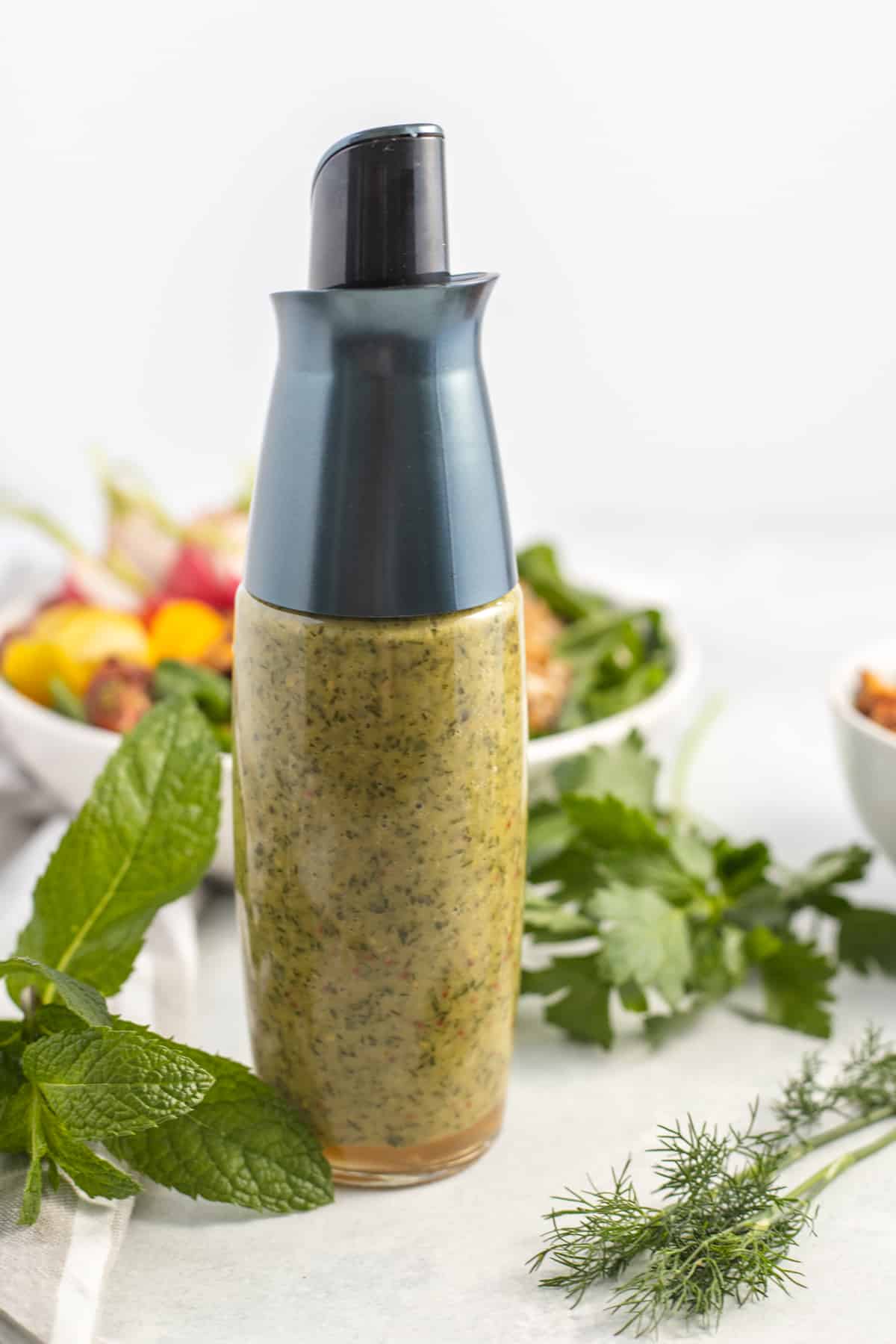
How to Store Fresh Herbs (Short & Long-Term)
You've harvested your herbs like a pro, now let's keep them fresh for more than 24 hours. Depending on the herb, the storage method makes all the difference.
Soft Herbs (Basil, Parsley, Cilantro, Mint, Dill)
These herbs are delicate and leafy. Think of them like fresh flowers.
Vase Method (Best for: Cilantro, Parsley, Mint)
- Trim the stems and remove any leaves below the water line.
- Place in a glass with 1-2 inches of water.
- Loosely cover with a plastic bag or reusable produce bag.
- Store in the fridge
This method can keep herbs fresh for 7-10 days!
Paper Towel Wrap (Great for: Dill, Chives)
- Rinse and pat dry.
- Wrap loosely in a slightly damp paper towel.
- Place in a reusable zip bag or container.
- Store in the fridge drawer.
Woody Herbs (Rosemary, Thyme, Oregano, Sage)
- Rinse gently and dry completely (moisture = mold).
- Wrap in dry paper towel and place in a bag or container in the fridge.
- Will stay fresh for up to 2 weeks!
Can You Freeze Fresh Herbs?
Yes! Freezing is a great way to save herbs if you've harvested a big bunch or your garden is overflowing.
1. Chop & Freeze in Oil
- Finely chop herbs like basil or parsley.
- Pack into an ice cube tray and cover with olive oil.
- Freeze and pop out cubes to toss into pasta, stir-fries, or soups.
2. Whole Leaf Freeze (Best for: Sage, Rosemary, Thyme)
- Rinse and pat dry.
- Spread leaves or sprigs on a baking sheet and freeze until firm.
- Transfer to an airtight container or freezer bag.

Tips for Success
- Label everything! Once frozen, parsley and cilantro look suspiciously alike.
- Store herbs away from fruits. Ethylene gas from apples and bananas makes herbs wilt faster.
- Don't wash herbs until you're ready to use them, unless you're using the wrap or freeze method.
- Invest in herb shears or small kitchen scissors, they're a game changer.
Variations: What About Drying?
If you're more into long-term storage without using up freezer space:
Air Drying:
- Tie small bundles with twine and hang upside down in a warm, dry place.
- Takes 1-2 weeks. Once fully dry, crumble and store in jars.
Oven Drying (faster!):
- Place herbs on a baking sheet and dry at the lowest oven temp (around 180°F / 80°C) for 2-4 hours.
- Let cool completely before storing.
How to Use All Those Herbs
Once you've got herbs on hand, the possibilities are endless! Add them to:
- Salads (try my Orzo Pesto Salad)
- Salad dressings or vinaigrettes
- Herb butters or compound spreads
- Grain bowls, soups, and pastas
- Marinades for chicken or tofu
- Herb-packed veggie tacos or egg bakes



Leave a Reply