

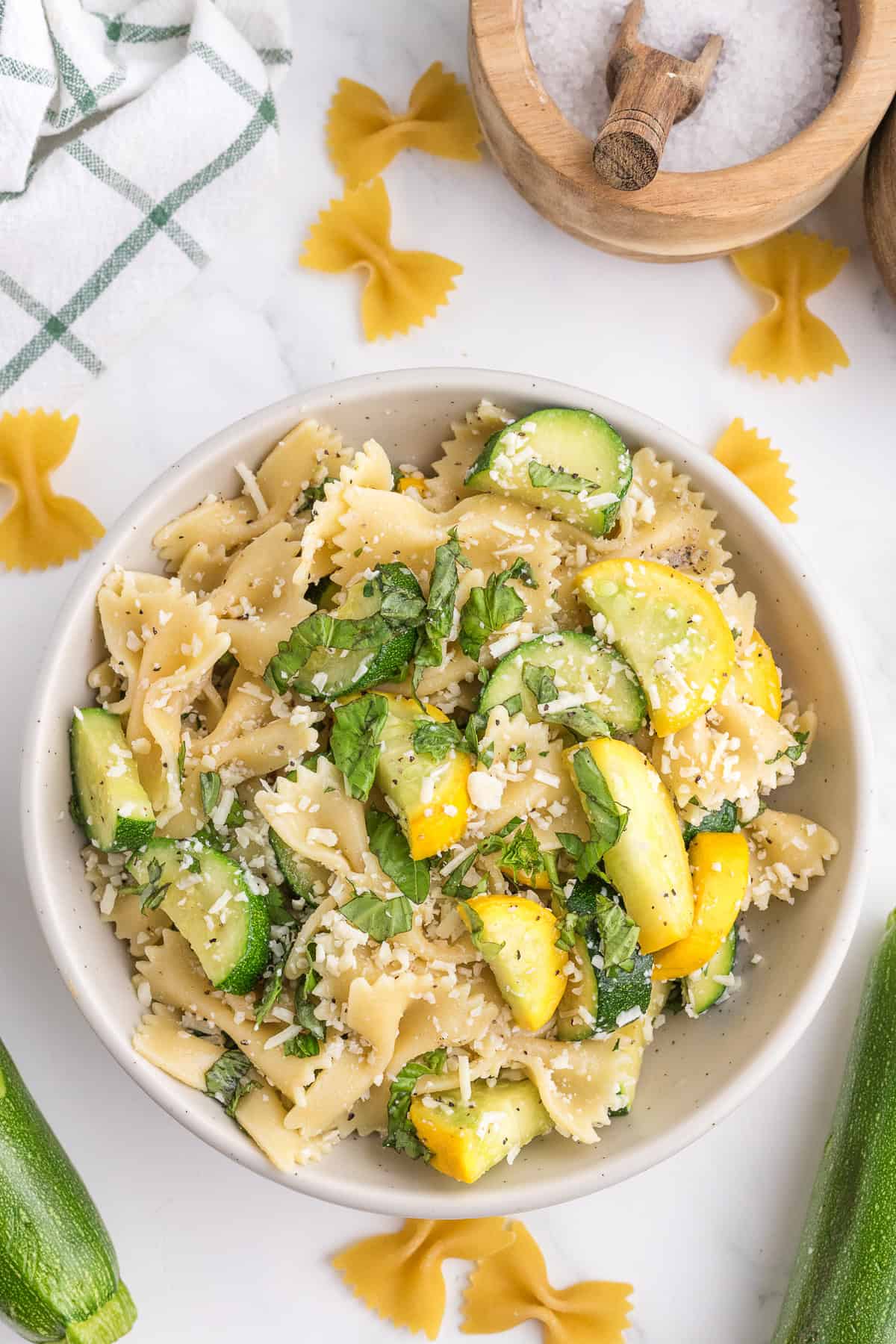
Looking for an easy pasta with summer squash and zucchini that's ready in 20 minutes? This one-pan summer squash pasta is light, garlicky, and comes together in a single skillet. The trick? Cooking everything together so the pasta soaks up all those buttery vegetable juices. It's the kind of recipe you'll make on repeat all summer long.

I know what you're thinking. Squash and zucchini can get watery and sad in pasta. But here's the thing: when you slice them thin and cook them over medium-high heat, they caramelize instead of turning to mush. Add some starchy pasta water and parmesan, and you've got this creamy, glossy sauce without any cream. If you love easy pasta dinners, try my Pasta with Peas next.
Quick Answer: Everything You Need to Know
- What is it? A simple one-pan pasta with summer squash and zucchini, bowtie noodles, parmesan, and fresh basil.
- How long does it take? 20 minutes total. The pasta cooks while you're sautéing the squash.
- What makes it creamy? Pasta water + parmesan = magic. No heavy cream needed.
- The secret? Slice your squash thin (about ¼ inch) so it cooks fast and doesn't get soggy.
- Best for: Busy weeknights, meatless Monday, or when you've got too much squash from the garden.
Jump to:
The ingredients
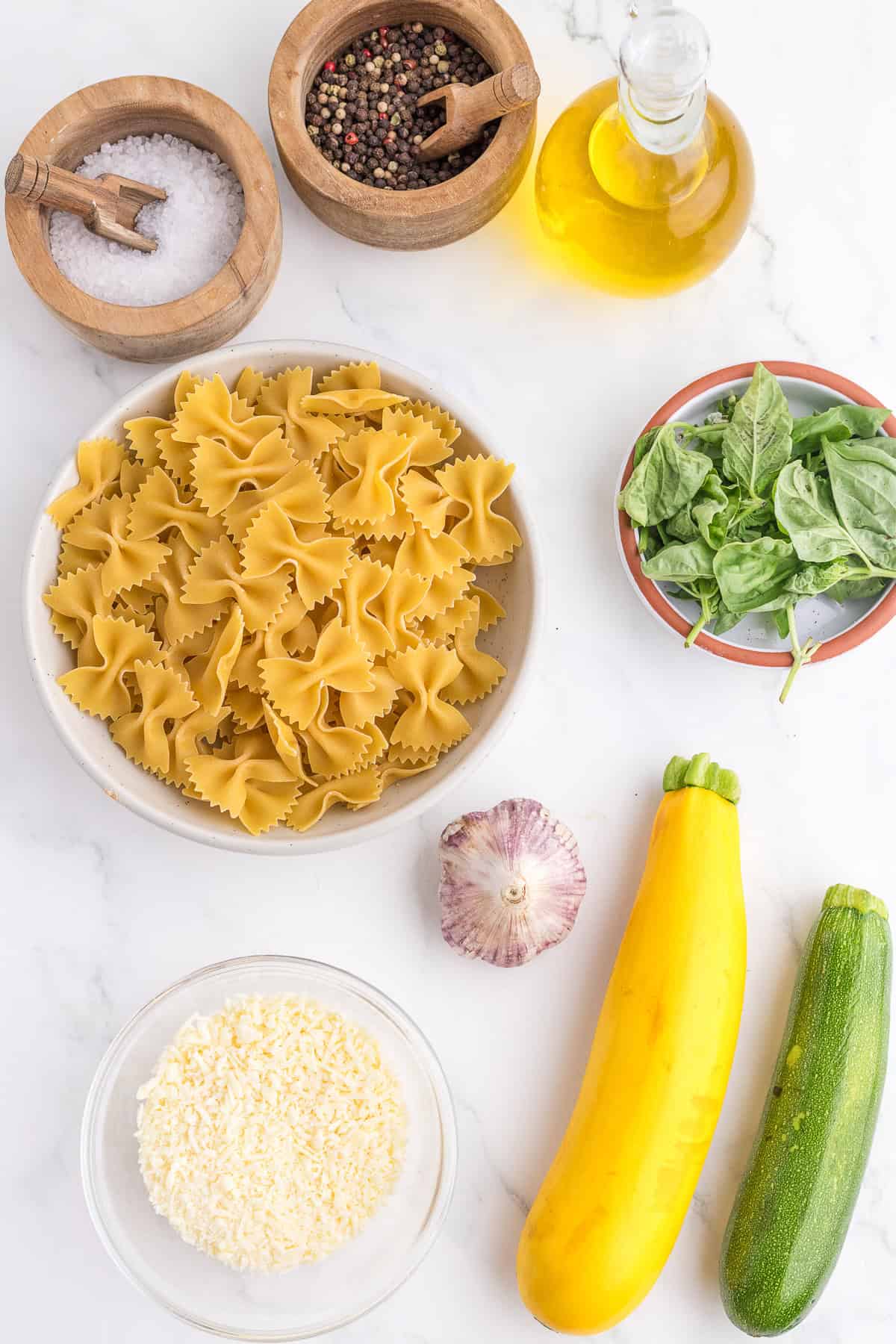
For the Pasta:
- 11 oz bowtie pasta (farfalle) - any short pasta works
- 3 tablespoons olive oil - don't skimp, this creates the base
- 1 zucchini, sliced into ¼-inch rounds
- 1 summer squash (yellow squash), sliced into ¼-inch rounds
- 2 garlic cloves, minced - fresh is key here
- ¾ cup reserved pasta water - this is your secret weapon
- ¾ cup grated parmesan cheese - the real stuff, not the green can
- ½ cup fresh basil, torn or chopped
- Salt and pepper to taste
Quick Tip: If your zucchini and summer squash are really thick, cut them into half-moons instead of full rounds. They'll cook faster and won't overpower the pasta.
For the ingredients quantities go to the recipe card below
Steps-by-step Instructions for the Summer Squash Pasta
Step 1: Get Your Pasta Going
Bring a large pot of salted water to a boil. I mean really salt it. It should taste like the ocean. Add the bowtie pasta and cook according to package directions (usually 10-12 minutes).
Here's the important part: Before you drain it, scoop out about 1 cup of pasta water with a measuring cup or mug. Set it aside. You'll need ¾ cup, but it's better to have extra. Trust me on this.
Step 2: Sauté the Squash
While the pasta's cooking, heat a large skillet over medium-high heat. Add the olive oil and let it get shimmery. Not smoking, just hot.
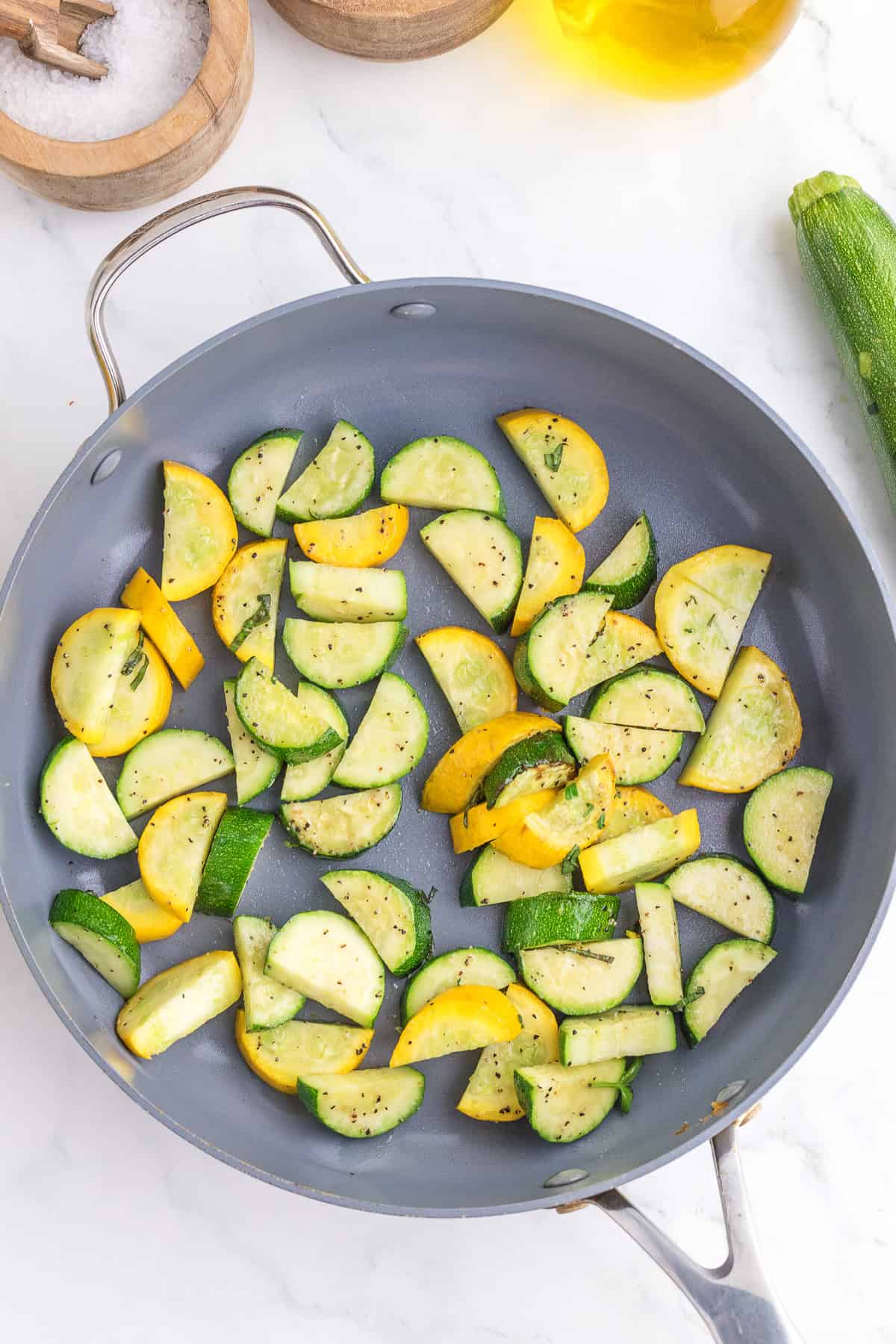
Toss in your zucchini and summer squash slices. Spread them out in a single layer if you can. Don't stir them constantly. Let them sit for 2-3 minutes so they get those golden-brown edges. That's where the flavor is.
Flip them and cook another 2-3 minutes. You want them tender but not mushy. They should still have a little bite.
Step 3: Add the Garlic (Timing Matters!)
Push the squash to the sides of the skillet and add the minced garlic right to the center. Cook it for about 30 seconds, just until you smell it.
Here's why this matters: garlic burns fast. If you add it too early, it gets bitter. If you smell it, it's ready. That's your cue.
Step 4: Combine Everything
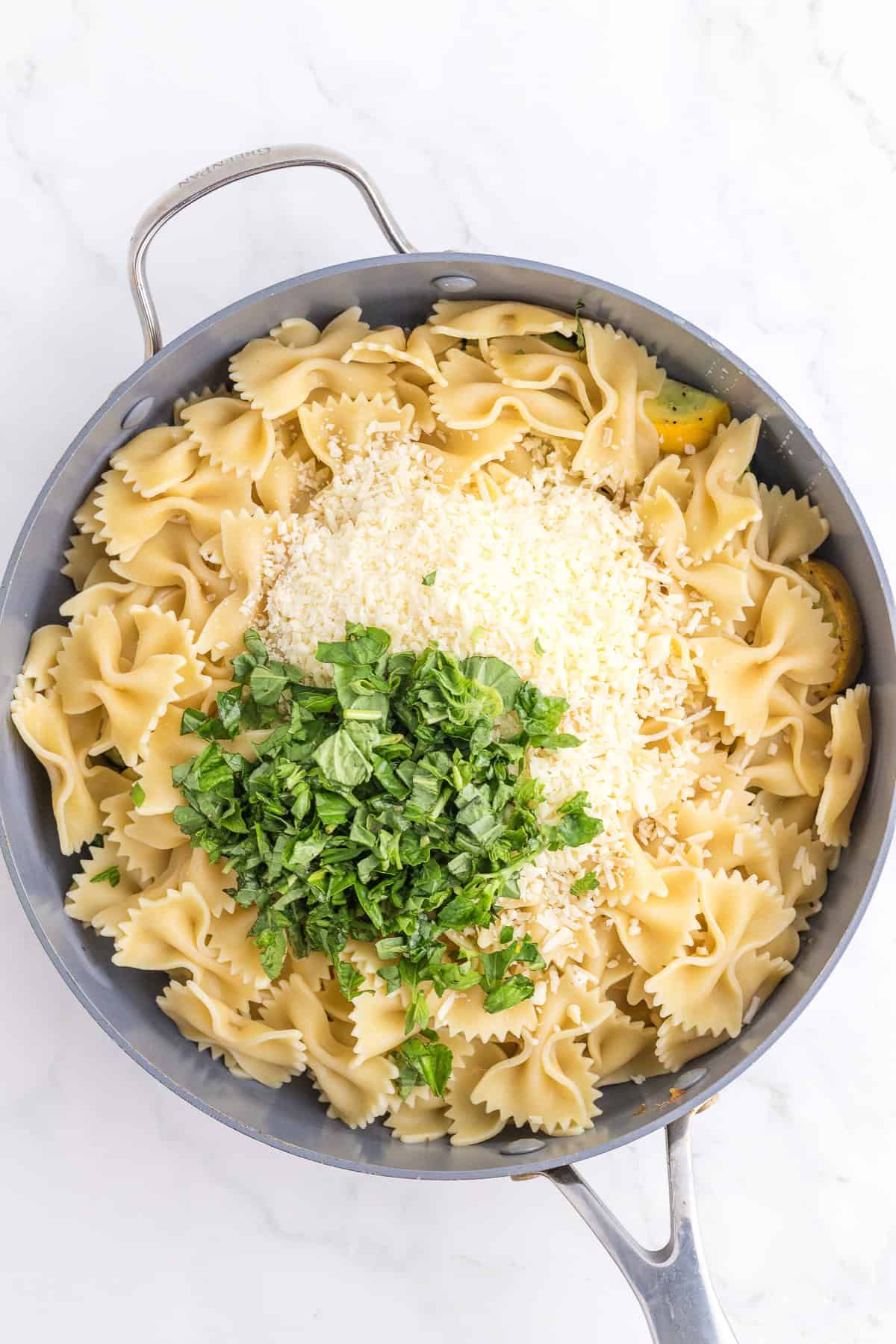
Lower the heat to medium. Add your drained pasta straight into the skillet with the vegetables. Pour in ¾ cup of that pasta water you saved.
Here's what happens next: the starch from the pasta water mixes with the parmesan and creates this silky, glossy coating. It's basically a cheat code for creamy pasta without cream.
Sprinkle in the parmesan cheese and basil. Toss everything together with tongs for about 1-2 minutes. The sauce will thicken as you stir. If it looks too thick, add a splash more pasta water. If it's too thin, let it cook another minute.
Season with salt and pepper. Taste it. Adjust if needed.
Step 5:
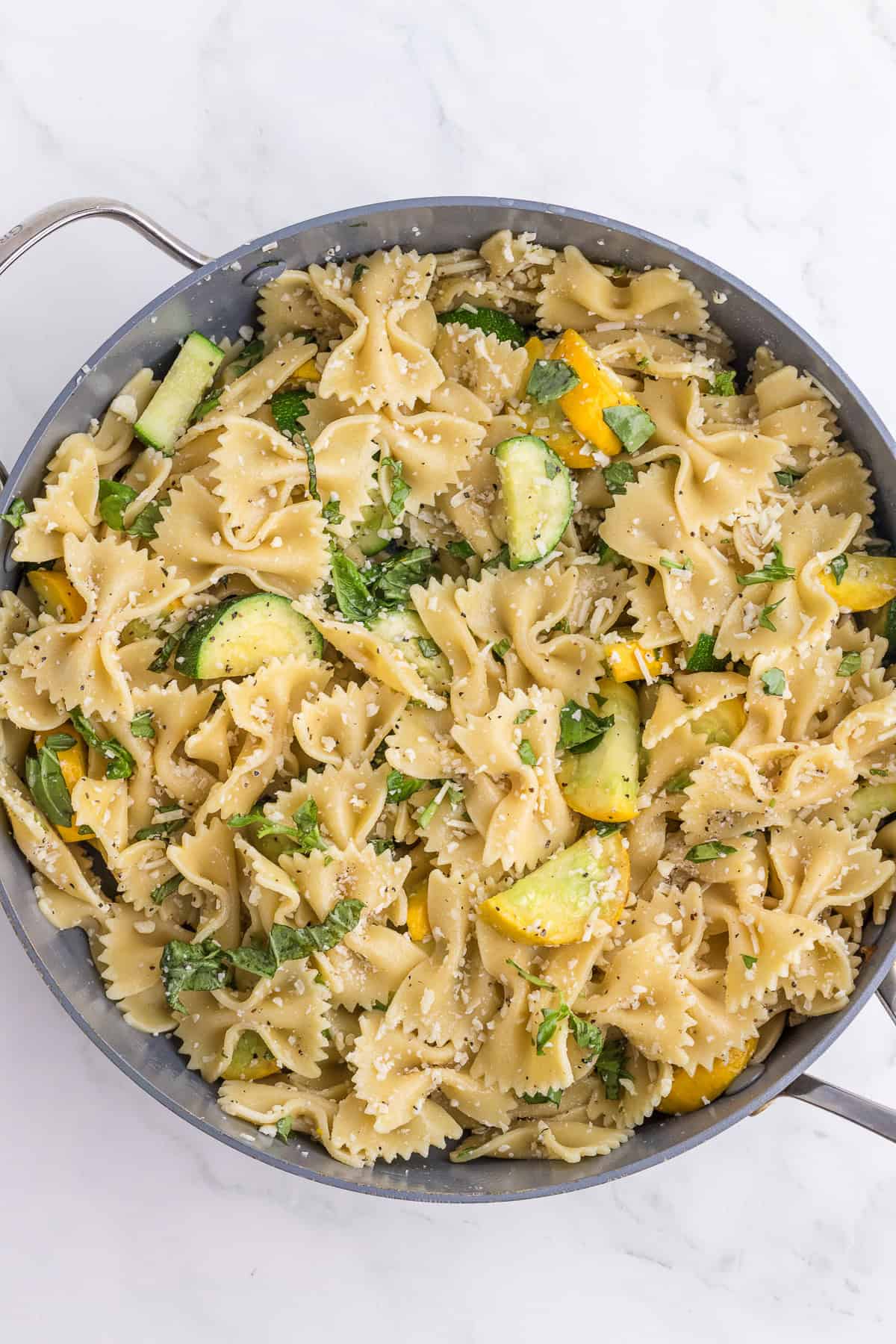
Serve immediately. I like to add an extra sprinkle of parmesan on top because, well, cheese.
Things I Learned Making This Recipe
The squash needs space. The first time I made this, I crowded the pan and everything steamed instead of getting those nice caramelized edges. If your skillet's too small, cook the squash in batches.
Pasta water is not optional. I tried making this once with regular water because I forgot to save the pasta water. Big mistake. It was dry and the cheese clumped up. The starch in pasta water is what makes the sauce work.
Thin slices are everything. I used to cut my squash into thick chunks and they'd still be crunchy when the pasta was done. Quarter-inch slices cook in the same time as the pasta. It's all about timing.
Fresh basil at the end. If you add it too early, it turns brown and loses that bright, summery flavor. Always toss it in right before serving.
Easy Ways to Customize This Recipe
Add protein: Toss in some grilled chicken, shrimp, or white beans. I've done rotisserie chicken and it's perfect for using up leftovers.
Make it creamy: Stir in a few tablespoons of heavy cream or cream cheese at the end if you want something richer.
Swap the pasta: Penne, rigatoni, or even spaghetti work. Just stick with something that holds sauce well.
Try different herbs: No basil? Fresh parsley or even mint work here. I know mint sounds weird, but it's really good with zucchini.
Make it spicy: Add red pepper flakes with the garlic. Just a pinch gives it a nice kick.
Go full garden mode: Throw in cherry tomatoes, corn, or diced bell peppers. This recipe's pretty forgiving.
Here's What I Serve with This
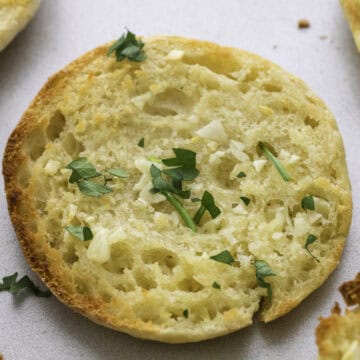
This summer squash pasta is light, so I usually pair it with something a little heartier or crunchy:


If You Have Leftovers
How to store it: Let it cool completely, then transfer to an airtight container. It'll keep in the fridge for up to 3 days.
How to reheat it: Here's the thing. This pasta dries out a little in the fridge because the noodles soak up all the sauce. When you reheat it, add a splash of water or broth to a skillet over medium heat. Toss the pasta around until it's heated through and the sauce loosens up again. Microwave works too, but add a tablespoon of water and cover it so it steams.
Can you freeze it? I wouldn't. Zucchini and summer squash get mushy when frozen. Stick to refrigerating this one.
Eat it cold? Honestly, yes. I've eaten this straight from the fridge and it's pretty good. Not as creamy, but still tasty.
FAQs
Can I use dried basil instead of fresh?
You can, but it won't be the same. Fresh basil gives this pasta that bright, summery flavor. If you only have dried, use about 1 teaspoon and add it when you're cooking the garlic so it has time to bloom.
What if I don't have bowtie pasta?
Any short pasta works. Penne, rigatoni, shells, rotini. Just avoid angel hair or spaghetti because they don't hold the chunky vegetables as well.
How do I keep the squash from getting watery?
Two things: slice them thin (about ¼ inch) and cook them over medium-high heat. Don't crowd the pan. They need space to brown, not steam. If they're releasing too much water, drain it out before adding the pasta.
Pasta with Summer Squash and Zucchini
Equipment
- Large pot for boiling pasta
- Large skillet (12-inch works best)
- Measuring cups and spoons
- Tongs or pasta fork
- Colander
Ingredients
- 11 oz bowtie pasta farfalle
- 3 tablespoons olive oil
- 1 medium zucchini sliced into ¼-inch rounds
- 1 medium yellow summer squash sliced into ¼-inch rounds
- 2 garlic cloves minced
- ¾ cup reserved pasta water
- ¾ cup freshly grated parmesan cheese
- ½ cup fresh basil leaves torn or roughly chopped
- Salt and black pepper to taste
Instructions
- Bring a large pot of heavily salted water to a rolling boil. Add the bowtie pasta and cook according to the package instructions (typically 10-12 minutes) until al dente. Before draining, reserve 1 cup of the starchy pasta water. Drain the pasta and set aside.
- While the pasta is cooking, heat a large skillet or sauté pan over medium-high heat. Add the olive oil and let it warm until it shimmers but doesn't smoke.
- Add the sliced zucchini and summer squash to the skillet in a single layer. Let them cook undisturbed for 2-3 minutes to develop golden-brown edges. Flip the slices and cook for an additional 2-3 minutes until tender with slight caramelization. The vegetables should still have some firmness.
- Create a small well in the center of the skillet by pushing the vegetables to the sides. Add the minced garlic directly to the hot oil and cook for 30-45 seconds, stirring constantly, until fragrant. Be careful not to let it burn.
- Reduce heat to medium. Add the drained pasta directly to the skillet along with ¾ cup of the reserved pasta water. Sprinkle the grated parmesan cheese over everything. Using tongs, toss the pasta continuously for 1-2 minutes. The starchy pasta water will emulsify with the cheese to create a creamy, glossy coating. If the sauce seems too thick, add more pasta water one tablespoon at a time. Season generously with salt and freshly cracked black pepper.
- Finish and serve: Remove the skillet from heat. Add the torn fresh basil leaves and toss gently to combine. The residual heat will wilt the basil perfectly. Serve immediately with extra parmesan cheese on top if desired.
Notes
- Don't skip the pasta water. The starch is what creates that creamy sauce without any cream. Regular water won't give you the same result.
- Slice uniformly. Try to keep your zucchini and summer squash slices the same thickness (about ¼ inch) so they cook evenly. Thicker pieces will still be crunchy, and thinner ones will turn mushy.
- Use freshly grated parmesan. Pre-grated cheese from a bag contains anti-caking agents that prevent it from melting smoothly. Grate it yourself from a block for the best texture.
- Add protein if you want. This recipe works great with grilled chicken, sautéed shrimp, or white beans stirred in at the end. Rotisserie chicken is my go-to shortcut.


Leave a Reply